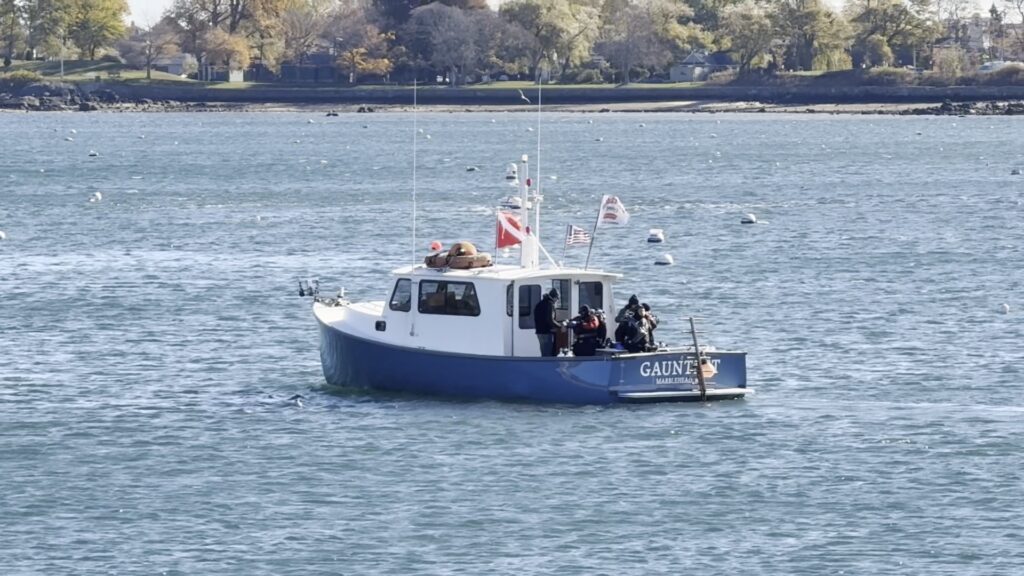
 November 15 marked the second volunteer diver event for the Beverly Harbormaster Ghost Trap Recovery Project, the third including the Public Safety Diving day a few weeks ago. As the dive operations partner, we continue to locate and recover derelict traps from the harbor. Thus far, 56 traps have been removed and there are many more to find and recover. Why this number, you may ask? There are a few reasons. The harbor environment does not work well for dredging with the dense mooring field and it is also a destructive form of removal since it disrupts the bottom. For this reason, divers are locating and rigging traps for removal. Another factor is the harbor has very strong current flowing through it which may
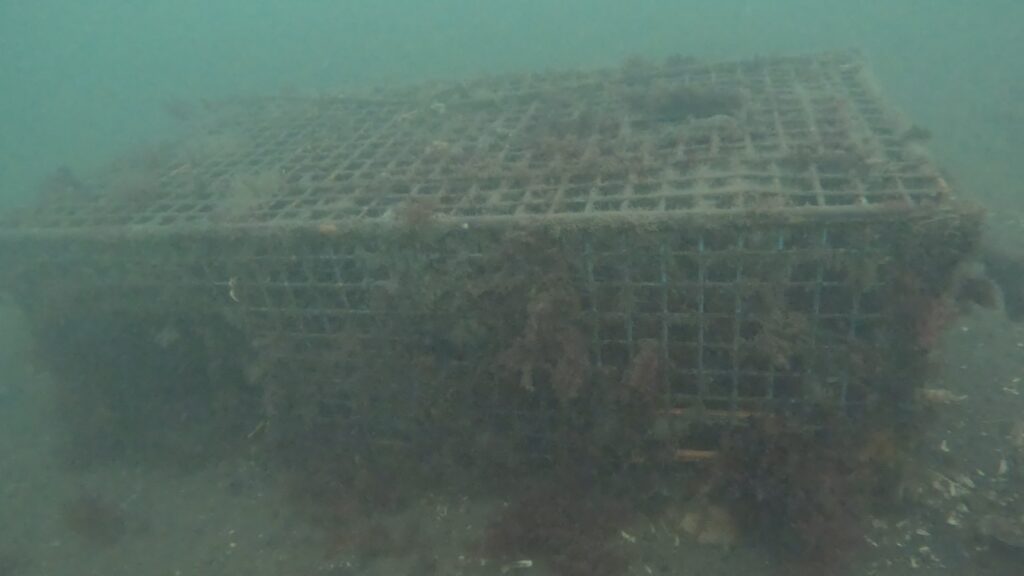 be surprising to learn. That is because Beverly Harbor sits at the mouth of the Danvers River and a significant choke point where the water flow moves through a narrower area is right around the Salem-Beverly bridge. Beverly Harbor tidal currents are driven directly by the exchange of water between Salem Sound and the Danvers, Bass, and North Rivers.
While we target slack water for our dives, we are often diving during periods of peak current flow. While the current is milder near the mouth of the harbor, as the channel narrows past Tuck Point, flow can reach 0.7 to 1.2 knots during mid-tide. By the Danvers river entrance near the bridges, the entire tidal volume of the Danvers, Bass, and North Rivers flows through narrow bridge pilings. Peak tidal current can reach 1.5 to 2.0 knots on average tides and exceed 2.5 knots during full or new moon spring tides. For this reason we consider the tide when selecting dates, as well the location within the harbor we are going to dive, and we have to be prepared to dive in some current. This is also why some of the dive teams are using DPVs.
We have a great deal of community support and involvement and it has been great to see volunteers from Endicott College working on trap logging and breakdown. Salem Sound Coastwatch is providing support as well. During the next event, come down to the waterfront during the shoreside trap processing and see what we’re finding and the impact it is having!
We are preparing for our next dive events in December and January. So, more to come and stay tuned for project updates. More information and the diver participation interest form can be found here: https://ghosttraprecovery.com
 On October 31, we kicked off the Ghost Trap Recovery Project with the first dives of the project. Following that, a Public Safety Day event occurred with the Massachusetts State Police, Massachusetts Environmental Police and Beverly Fire Department Dive Team with support from Salem Sound Coastwatch and Essex Tech students. Both events were a success with traps recovered, logged and recycled. We also had a ton of learnings on both line handling, dive operations, hauling operations and coordination which will help us as we continue the project. We are extremely appreciative of the collaboration with the fishing community and local lobsterman who are also supporting these efforts. This highlights one of the guiding principles of this project – partnership and collaboration. We’re so excited by the progress we’ve made and the positive energy associated with the project.
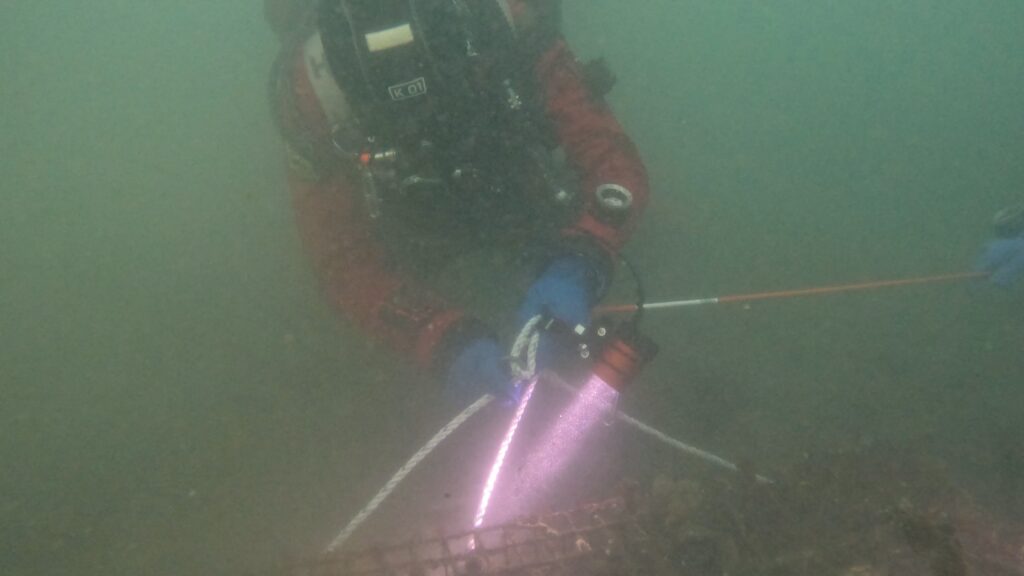
 s that are ghost fishing and these are the ones we’re most focused on. Once topside and logged in, the bycatch is released back into the water.
 The official start of the project is getting closer! We plan to kick off with the first dive operation on October 31. For this first event, a group of experienced and trained divers will pilot the operation and provide feedback which will inform how we refine and optimize our work for the Beverly Harbor diving environment. We also have set dates for the dives, which are below. Some winter months when weather is even more unpredictable have back-up dates associated with them.
 The Allentown was one of six Reading-class colliers, built at the Philadelphia, Pennsylvania shipyard of William Cramp & Son Ship and Engine Building Company for the Reading Railroad. The Allentown, hull number 190, was launched in June 1874. The 1583 gross ton iron collier measured approximately 250 feet in length, with a breadth and depth of 37 feet and 20 feet, respectively. The Allentown carried a crew of 18 men.
